08
26
LAB OF CULTURAL, CREATIVE AND FESTIVAL JOURNALISM
FILM REVIEW: THE MISERABLE MOTHER
Imagine becoming a parent and all you think about is one thing: Marxist-Feminist theory. For her second feature The Miserable Mother (Die miserable Mutter) German writer-director Susanne Heinrich has created a colourful musical à la Jacques Demy that addresses postpartum depression in a highly intellectual yet entertaining manner. by Berina Musa
Imagine becoming a parent and all you think about is one thing: Marxist-Feminist theory. For her second feature The Miserable Mother (Die miserable Mutter) German writer-director Susanne Heinrich has created a colourful musical à la Jacques Demy that addresses postpartum depression in a highly intellectual yet entertaining manner.
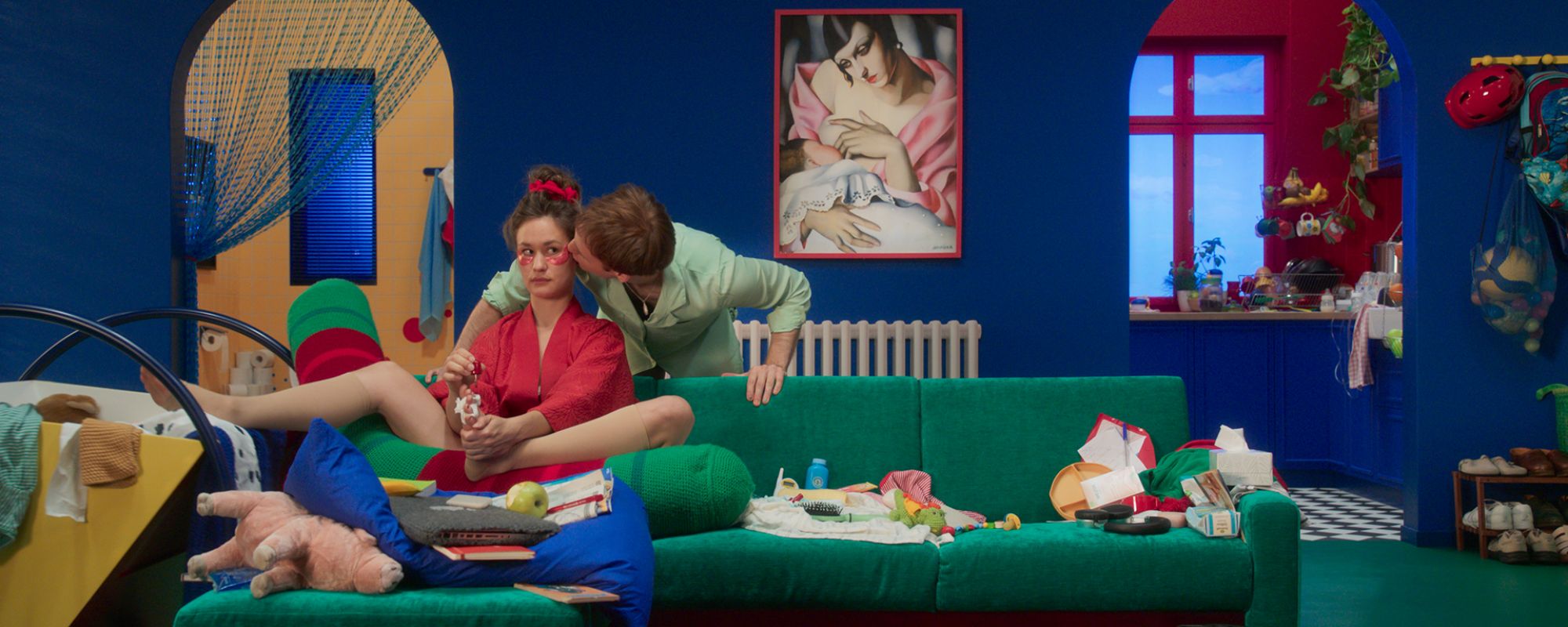
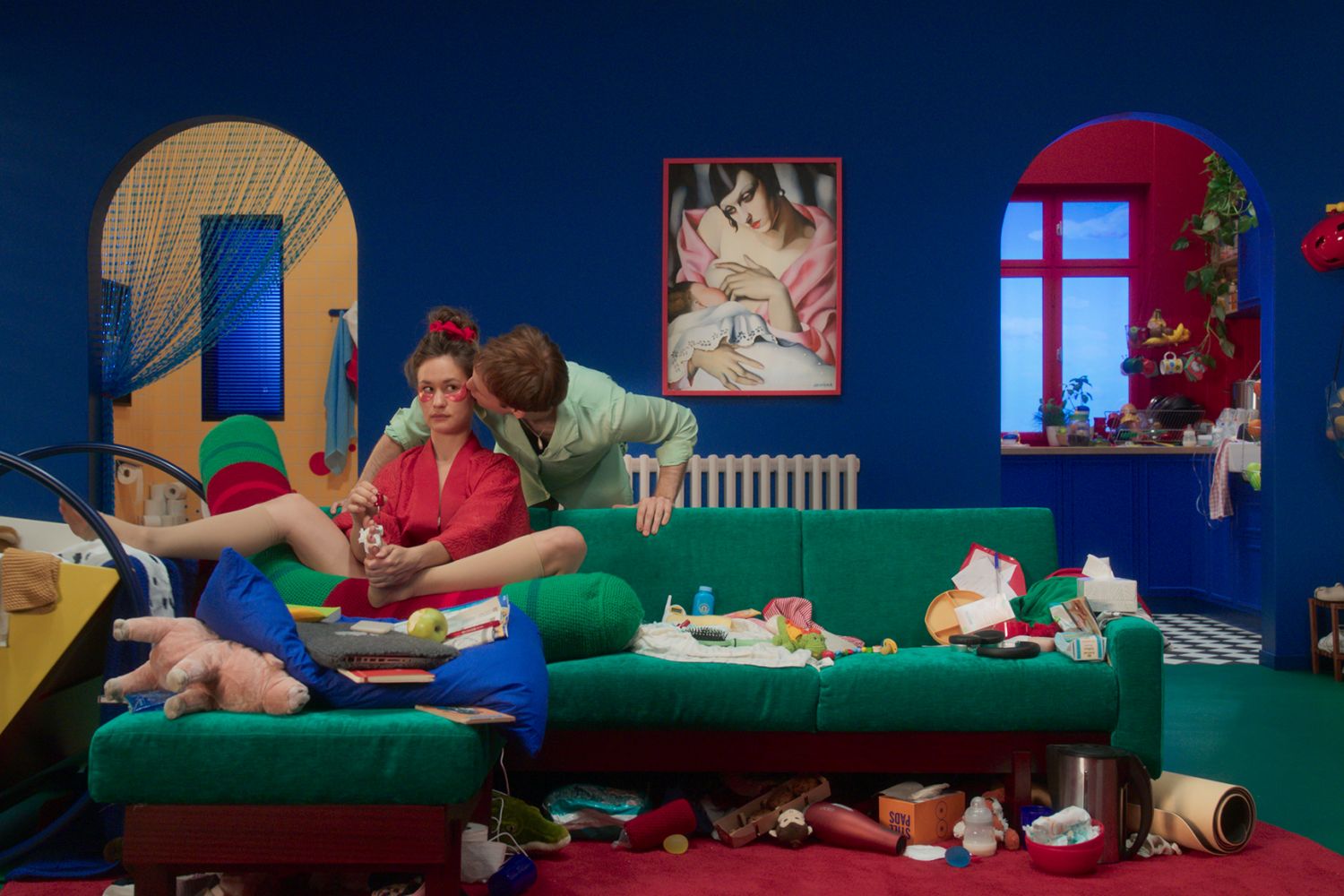
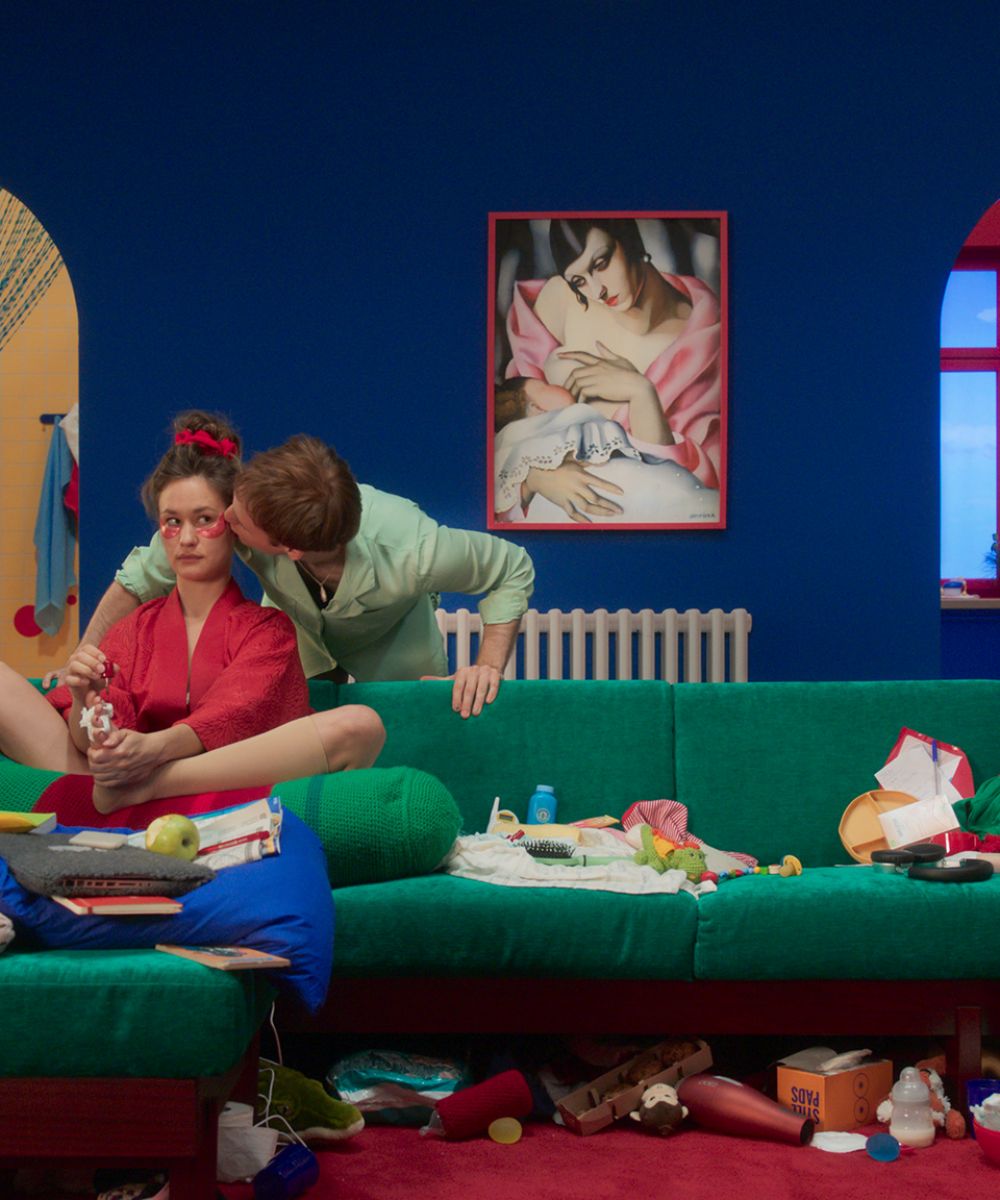
As first-time parents, the Miserable Mother (Rosa Landers) and Peter Pan (Theo Colarusso) tackle every challenge as a two-person team of equals. But as parental duties gradually shift towards the mother, their utopian dream of being “different” kinds of caregivers begins to dissolve. Exhaustion leads the woman to contemplate her existence — she dances, sings and philosophises about the unbearable inequality of parental labour...
Heinrich fully immerses herself in intertextuality, drawing on references from the Nouvelle Vague and Brechtian theatre. The narrative incorporates techniques such as breaking the fourth wall and use of intertitles, through which Heinrich weaves Marxist-Feminist jargon, portraying both parents as middle-class intellectuals.
The brightly coloured, superbly-mounted set and costume-design by Miren Oller and Laura Yasemin Schäffler, together with Willi Sieger’s score, echo Demy classics. The editing, meanwhile, evokes Godard: Clémentine Decremps employs jump cuts and overlapping, orchestrating rhythms with mathematical precision. Ágnes Pákózdi's camera flows weightlessly as it follows Graham Smith's choreography, particularly in the memorably delightful flamenco sequence.
Although highly referential and formalistic, Heinrich's work enchants the viewer with original ruptures. Whether through light-footed irony or a cameo by the protagonist of Heinrich's feature debut Aren't You Happy? (Das melancholische Mädchen), Marie Rathscheck, the film remains inventive throughout. Despite its playfulness, The Miserable Mother never appears disrespectful towards its complex subject-matter.
This is largely due to its meta-cinematic framing, encapsulated by one sequence in particular: in an extended close-up, the Mother promises her daughter not to "screw her up” as her own mama did. The newborn suddenly replies in a high- pitched voice, transforming this exchange into the touchstone scene of the film. Whether the hapless protagonists will land on their feet after such oddball shenanigans, meanwhile, remains open to interpretation. One element which is beyond doubt, however, is that the film's brightest asset is Landers — her impeccable physicality, comic timing, and articulation mark her as a “twinkling star” in the ascendant.
5th Lab of Cultural, Creative and Festival Journalism
European Film Festival Palić 2026